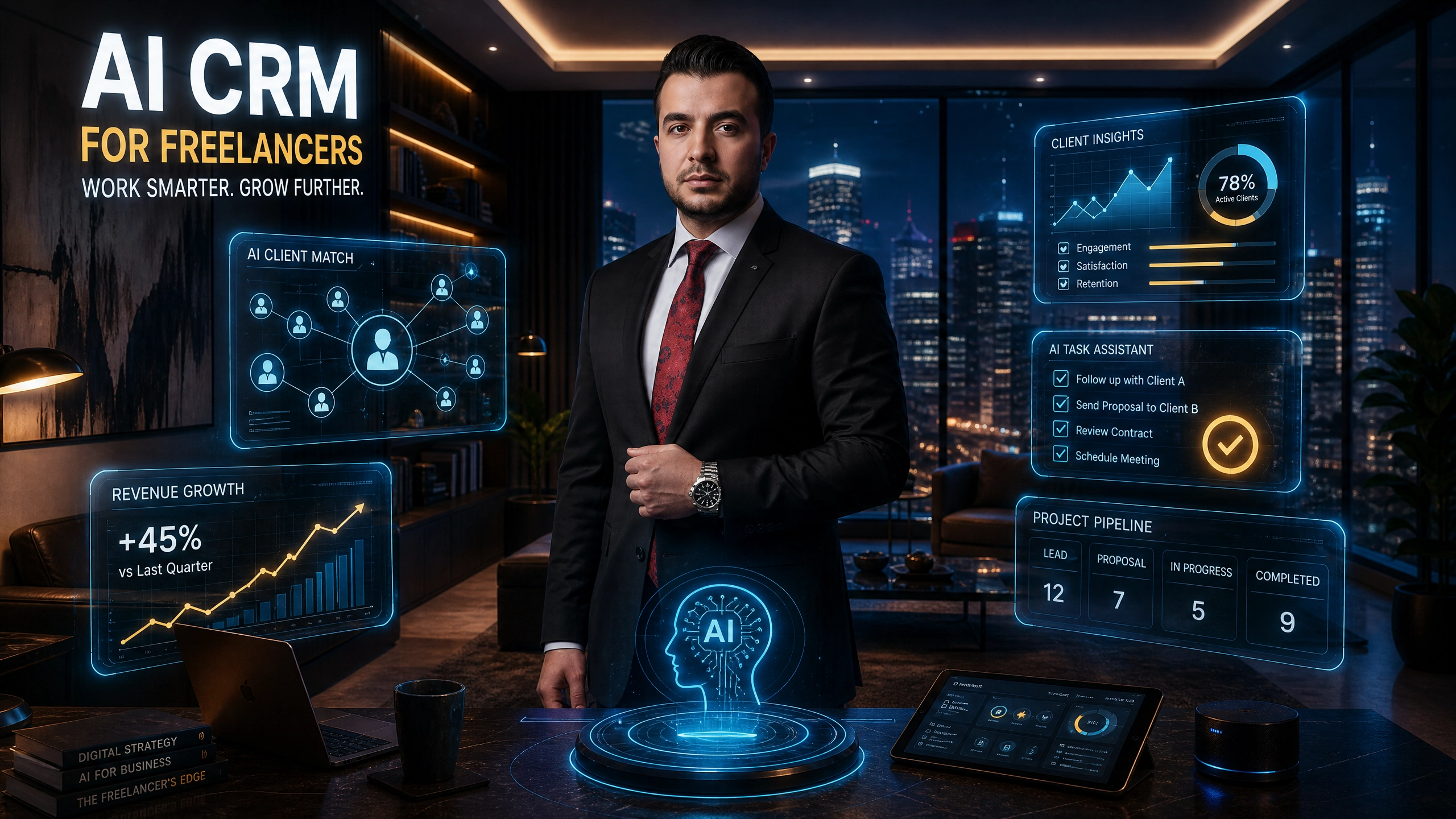
AI CRM for Freelancers: 7 Proven Secrets to Ultimate Growth
Managing a solo enterprise often feels like an intricate balancing act—juggling high-level strategy with the minutiae of daily administration. For independent professionals aiming to scale without the traditional overhead of a large team, an AI CRM for freelancers has emerged as the definitive competitive advantage. We are no longer in an era where spreadsheets suffice; the modern freelance economy demands the precision and predictive power of artificial intelligence.
The rise of the “solopreneur” has been met with a technological revolution. According to recent industry analysis, the U.S. freelance workforce has surged to over 72.9 million individuals, contributing a staggering $1.5 trillion to the economy [1]. In this hyper-competitive landscape, your ability to automate tedious administrative tasks and focus on your core craft is what separates stagnant businesses from those achieving exponential growth.
In this comprehensive guide, we will explore how an AI-native CRM transforms the freelance workflow from reactive to proactive, ensuring your career reaches unprecedented heights.
What is an AI CRM for Freelancers?
At its core, a Customer Relationship Management (CRM) system is a digital repository for tracking client interactions and sales pipelines. However, an AI CRM for freelancers supercharges this concept with machine learning. It does not merely store data; it actively interprets it to work on your behalf.
“AI-powered CRMs deliver essential capabilities that help growing businesses automate manual work, make smarter decisions, and deliver better customer experiences at scale.” [2]
Instead of manual data entry, an AI-powered system learns from your communication patterns. It can predict purchase readiness, draft personalized outreach, and automate follow-ups. Think of it as an elite, invisible operations manager working 24/7 to ensure no opportunity is missed.
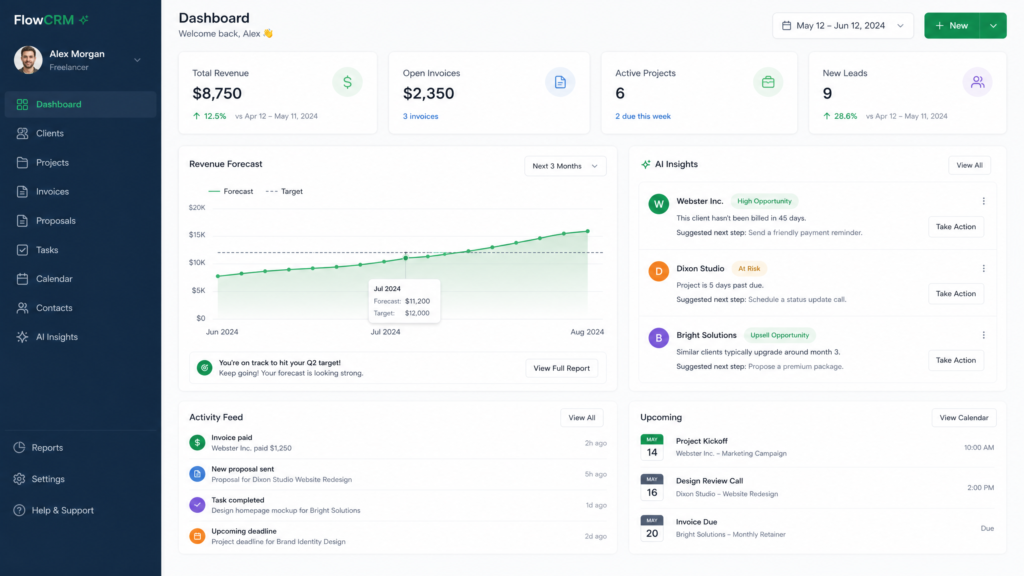
Figure 1: A modern AI CRM dashboard tailored for freelancers, featuring revenue forecasting and AI-driven insights.
7 Proven Benefits of AI Integration
The transition to artificial intelligence offers more than just incremental improvements; it provides a fundamental shift in how you manage your business.
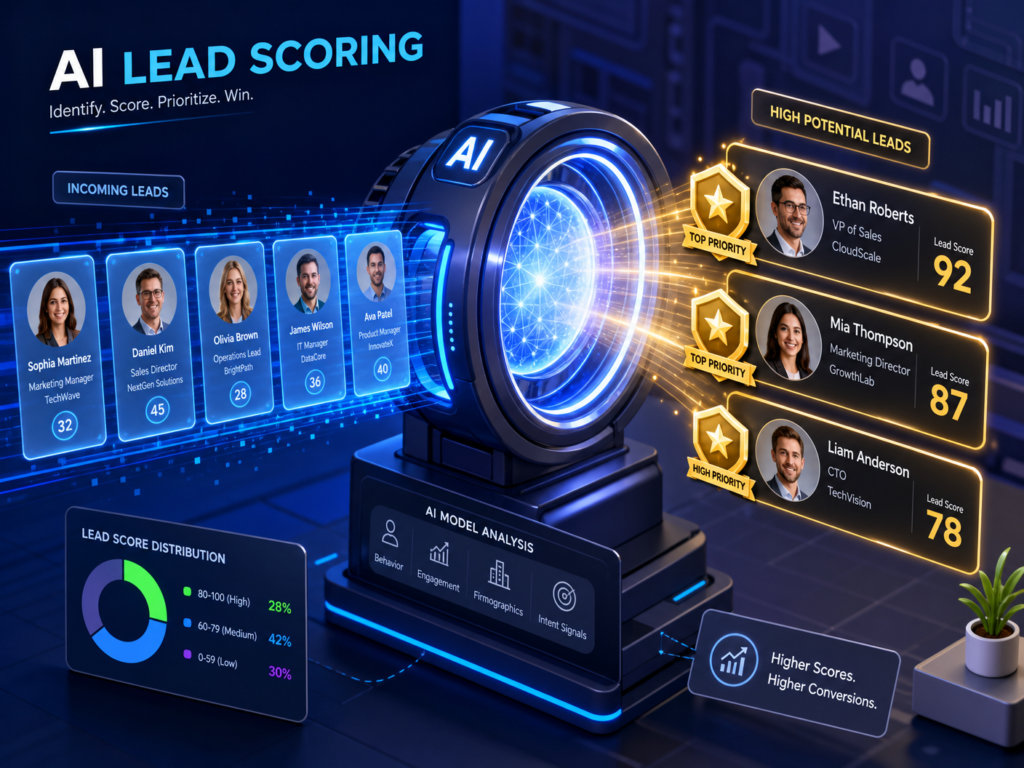
1. Automated Lead Generation and Scoring
Not all leads are created equal. AI analyzes incoming prospects and assigns a “score” based on behavioral signals—such as email open rates and website engagement. This allows you to prioritize high-intent prospects, ensuring your energy is spent on closing deals rather than chasing dead ends.
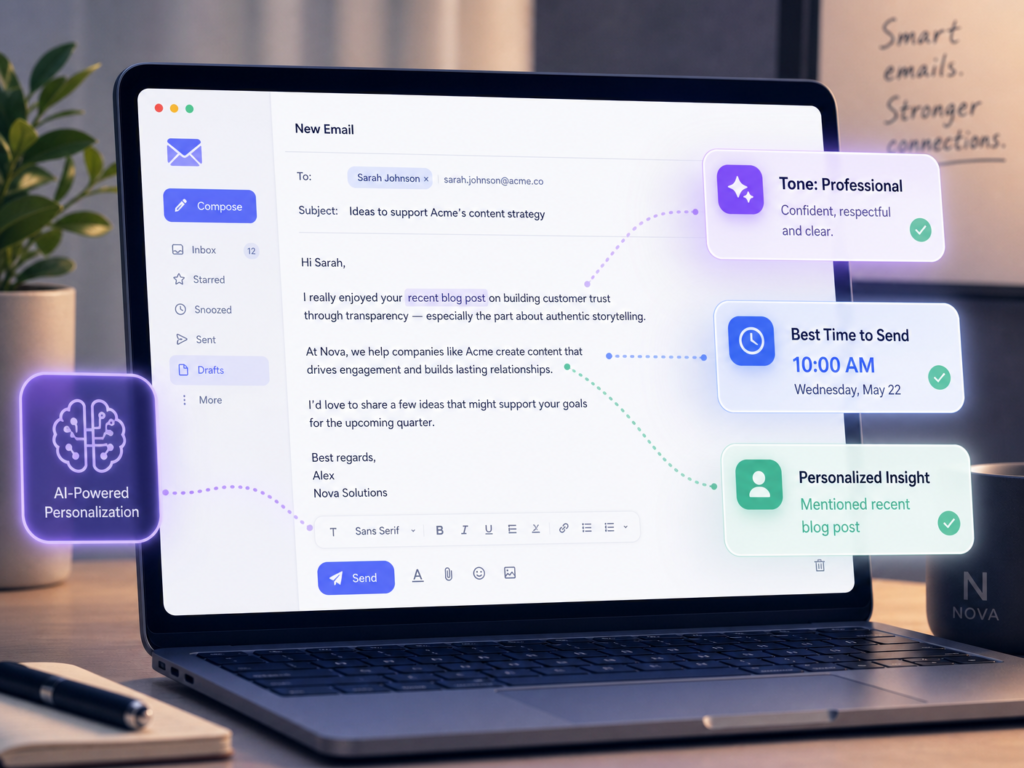
2. Hyper-Personalized Communication
Cold outreach is often the bottleneck of freelance growth. Using Natural Language Processing (NLP), an AI CRM can suggest the optimal tone for your messages and even determine the best time to send an email based on a client’s historical activity [2].
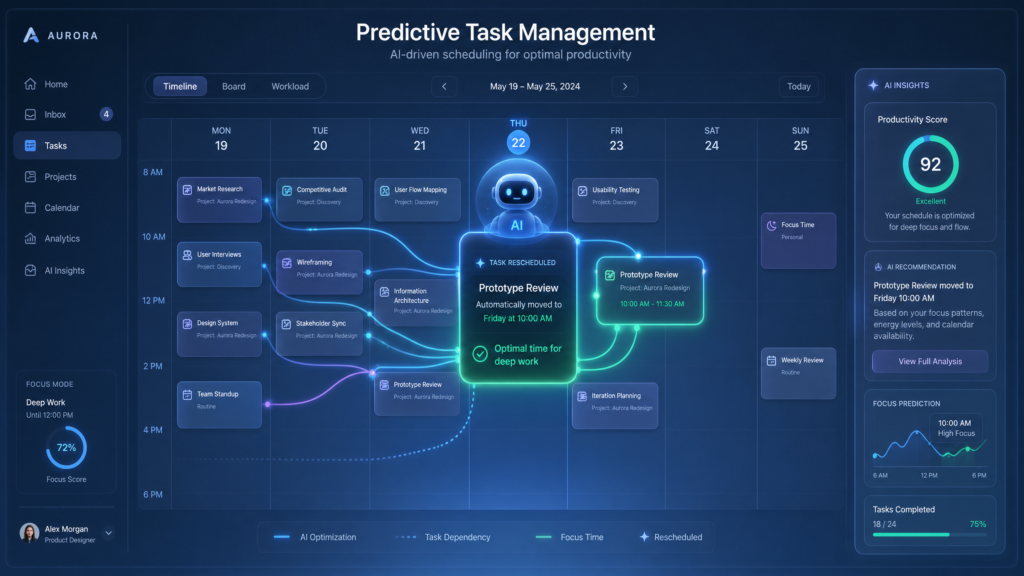
3. Predictive Task Management
Standard to-do lists are static. AI-driven task management is dynamic. By learning your working speed and project habits, the system can automatically reschedule tasks and flag potential deadline risks before they become crises.
4. Seamless Financial Workflows
Chasing payments is a drain on creative energy. AI CRMs automate the entire financial lifecycle—from tracking billable hours to sending polite, automated reminders for overdue invoices. Furthermore, they can forecast your upcoming cash flow, helping you navigate the “feast or famine” cycles common in freelancing.
5. Proactive Client Retention
Acquiring a new client is significantly more expensive than retaining an existing one. AI excels at relationship maintenance by prompting you to check in with past clients at the exact moment they are likely to need your services again.
6. Data-Driven Strategic Insights
To grow, you must understand your profitability. AI acts as your personal data analyst, providing visual dashboards that highlight your most lucrative services and marketing channels. This allows you to pivot your strategy based on hard data rather than intuition.
7. The 24/7 Virtual Assistant
From auto-populating client data to categorizing incoming inquiries, AI handles the repetitive, low-value tasks. This reclamation of time allows you to take on more high-value projects or enjoy a better work-life balance.For a deeper dive into how AI can further streamline your operations, read our next article: Scaling to Six Figures: How AI Automation Replaces a Virtual Assistant for Solopreneurs.
Essential Features for Solo Professionals
When evaluating an AI CRM for freelancers, prioritize these non-negotiable features:
| Feature | Importance | Description |
| Native Integrations | Critical | Must connect seamlessly with tools like Stripe, Slack, and your email provider. |
| Intuitive UI | High | A clean, visual dashboard that requires zero technical expertise to navigate. |
| Predictive Analytics | Essential | Capabilities for lead scoring, revenue forecasting, and churn prediction. |
| Cost Efficiency | High | Tiered pricing models designed specifically for independent contractors. |
Choosing the Right Platform for Your Business
Selecting a platform requires an audit of your current bottlenecks. If your primary struggle is lead generation, look for a CRM with robust AI-driven prospecting tools. If you are overwhelmed by administration, focus on workflow automation.
We recommend testing platforms like HubSpot’s Smart CRM or Salesforce for Small Business, both of which offer AI-native architectures that reduce integration friction [2] [3]. Most reputable providers offer a 14-day trial; use this period to ensure the software feels like a natural extension of your workflow.
Future Trends: The AI-Driven Gig Economy
The integration of AI is not a passing trend; it is a permanent paradigm shift. We are moving toward a future of “hyper-automation,” where CRMs may handle entire onboarding processes via conversational AI agents. Staying ahead of this curve is vital for long-term survival in the freelance marketplace.
By embracing an AI CRM for freelancers today, you are not just buying software—you are future-proofing your career. You are positioning yourself as a modern, efficient professional capable of delivering enterprise-level results with solo agility.
Frequently Asked Questions (FAQs)
What is the primary difference between a traditional CRM and an AI CRM?
A traditional CRM acts as a database for storing information. An AI CRM uses machine learning to analyze that data, providing predictive insights, automating tasks, and personalizing client interactions without manual intervention.
Is an AI CRM worth the investment for a beginner?
Yes. Many AI-native CRMs offer free or low-cost tiers for beginners. Starting with these tools early allows you to build a scalable foundation from day one, preventing the “manual data debt” that often hampers growing businesses.
How does AI help with freelance client retention?
AI monitors client behavior and interaction history to predict when a client might need your services again or if they are showing signs of “churn.” It prompts you to reach out at the optimal moment, keeping you top-of-mind.
References
1.AutoFaceless: 72.9M US Freelancers, $1.5T in Earnings & Platform Growth
2.HubSpot: AI CRM benefits every growing business should know
3.Salesforce: How Small Business Leaders Are Strategizing with AI, Data, & CRM